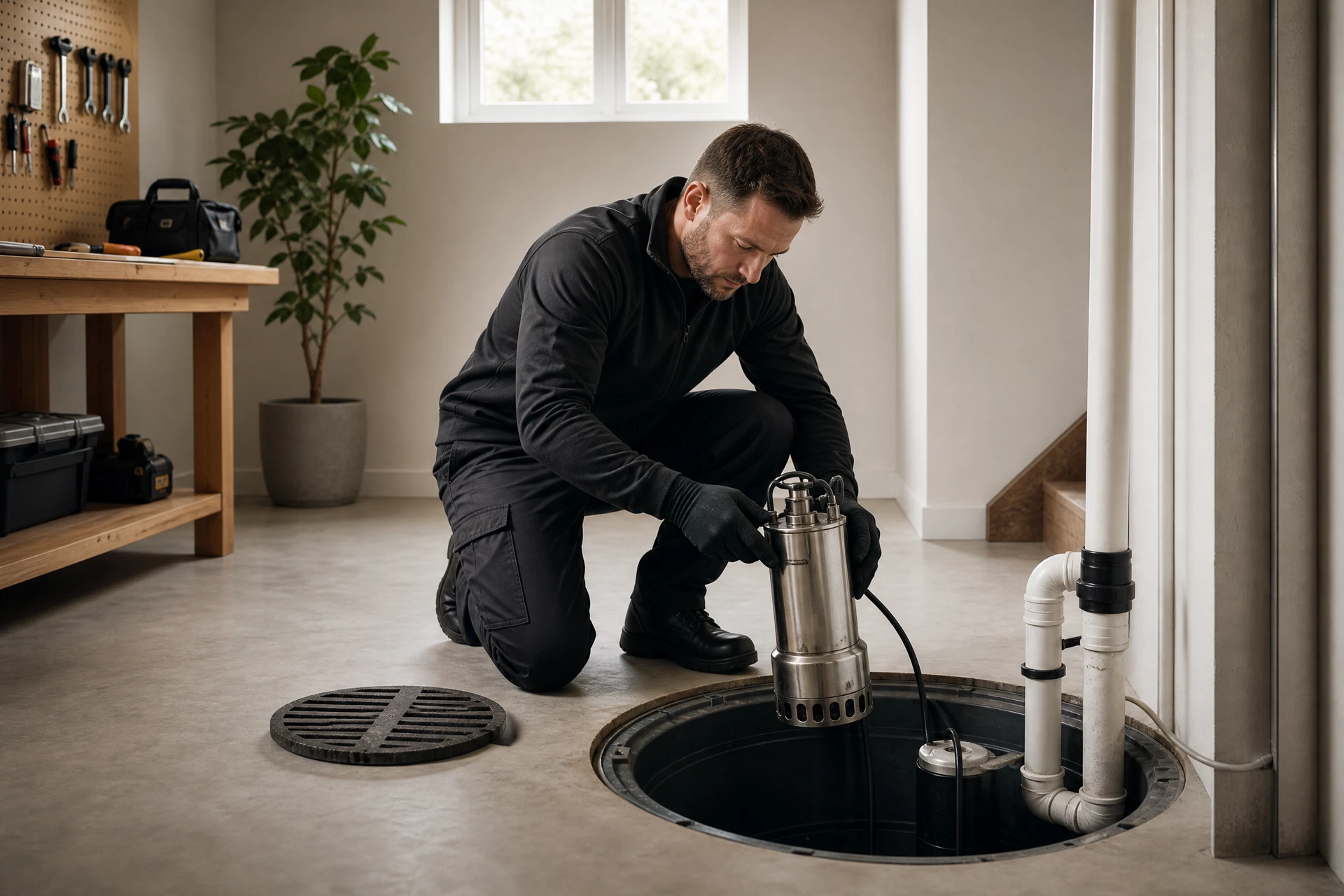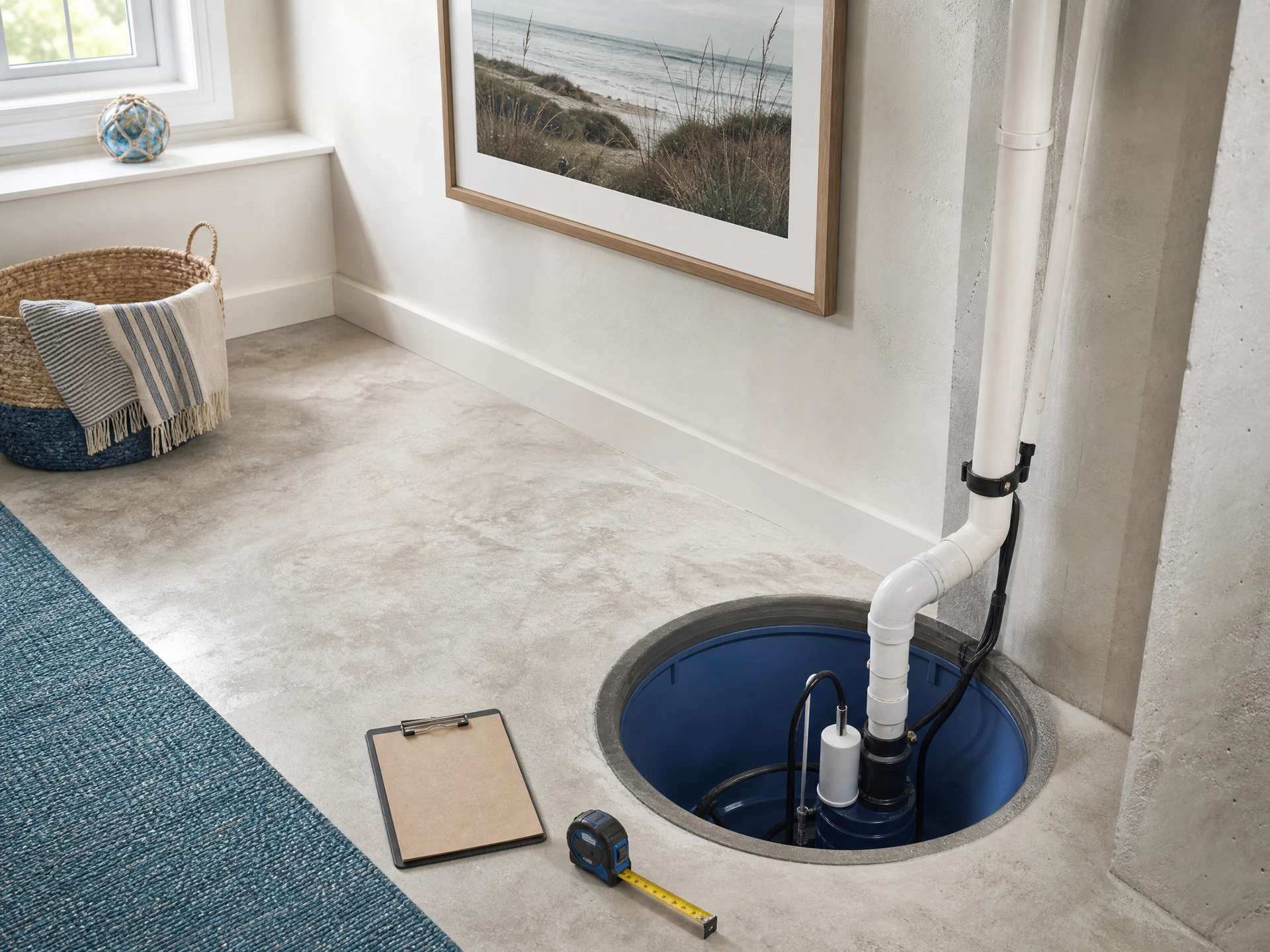
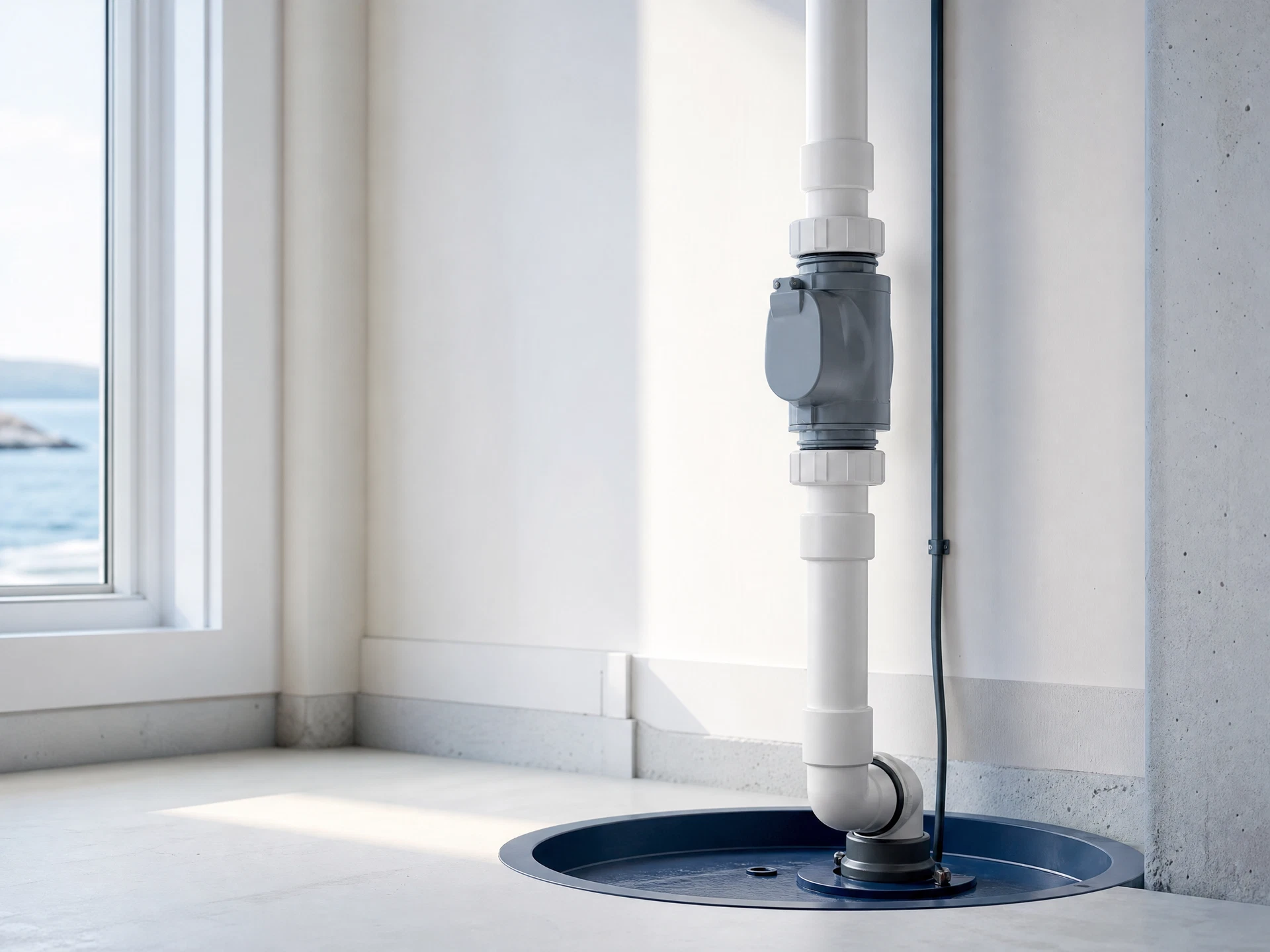
A sump pump check valve is a one-way fitting on the pipe above the pump. It lets water leave the pit when the pump runs and stops that water from flowing back down when the motor shuts off. Without a working check valve, the same water can return to the pit, forcing extra pump cycles and increasing the risk of wear, noise, and poor performance during a storm.
How a Check Valve Protects Your Pump
When the pump stops, a column of water remains in the vertical pipe above it. The check valve holds that water in place rather than allowing it to fall back into the pit. This helps the pit stay empty after a cycle and prevents the float switch from turning the pump back on just to move the same water again.
Signs a Check Valve May Be Failing
A loud thump when the pump stops, water returning quickly to the pit, frequent short cycles, and a pump that appears to run more often than usual can all point to a valve issue. These symptoms can also come from a float switch, pump, or outside pipe problem, which is why the entire system should be evaluated rather than replacing one part by guesswork.
Why Direction and Placement Matter
A check valve must be installed in the correct direction and positioned where it can be inspected and serviced. An upside-down valve blocks water from leaving the pit. A poorly placed valve can make it difficult to identify leaks or replace a failed fitting. The pipe connections, pump discharge, and valve direction should be checked whenever a pump is replaced.
When to Call a Professional
Call for service if the pump is short cycling, the pit refills immediately after the pump stops, the piping leaks, or you hear new banging from the vertical pipe. Replacing a valve can require working with the pump, pipe connections, and electrical equipment in a confined wet area. Cape Cod Pump Company can inspect the valve as part of a full sump pump assessment across Cape Cod and the South Shore.
Frequently Asked Questions
Do all sump pumps need a check valve?
Most residential sump pump systems with vertical piping need a properly installed check valve. It prevents water in the pipe from dropping back into the pit after the pump stops. The exact setup depends on the pump and piping design.
What does a bad sump pump check valve sound like?
A failed or loose check valve may cause a loud thump or banging sound when the pump stops. Noise can also come from unsecured piping, so the valve and pipe supports should be inspected together.
Can a bad check valve make a sump pump run constantly?
A bad valve usually causes water to fall back into the pit, which can create frequent repeat cycles. A pump that truly runs without stopping is more often related to a stuck float switch, very high incoming water, or a blockage outside. Both situations warrant prompt service.
How often should a sump pump check valve be replaced?
There is no fixed replacement schedule because water quality, run frequency, and valve type vary. Inspect it during annual sump pump maintenance and replace it when it leaks, sticks, causes repeated cycling, or shows damage.
What is the difference between a sump pump valve and a check valve?
When homeowners say “sump pump valve,” they often mean the check valve on the pipe above the pump. It is a one-way fitting that lets water travel out of the pit while stopping that water from falling back after the pump shuts off.
Can a sump pump check valve be repaired?
A check valve that is loose, installed in the wrong direction, or obstructed may be corrected. A valve that leaks, sticks, cracks, or repeatedly allows water back into the pit is normally replaced. The pump and pipe connections should be inspected at the same time.
Cape Cod Pump Company — South Shore & Cape Cod, MA
Questions About Your Basement?
We are the dedicated sump pump specialists for Cape Cod and the South Shore. Schedule an assessment and get honest answers about your system — no pressure, no upselling.