Cape Cod & South ShoreSump Pump Specialists
Ground water threats don't stop when the storm clears. High water tables, tidal surges, and seasonal snowmelts put continuous pressure on Southeastern Massachusetts basements.
We provide complete residential sump pump services, including fast replacements, battery backups, and routine inspections, to keep your home dry year-round across Cape Cod and the South Shore.
Homeowner Resources · Winter Prep
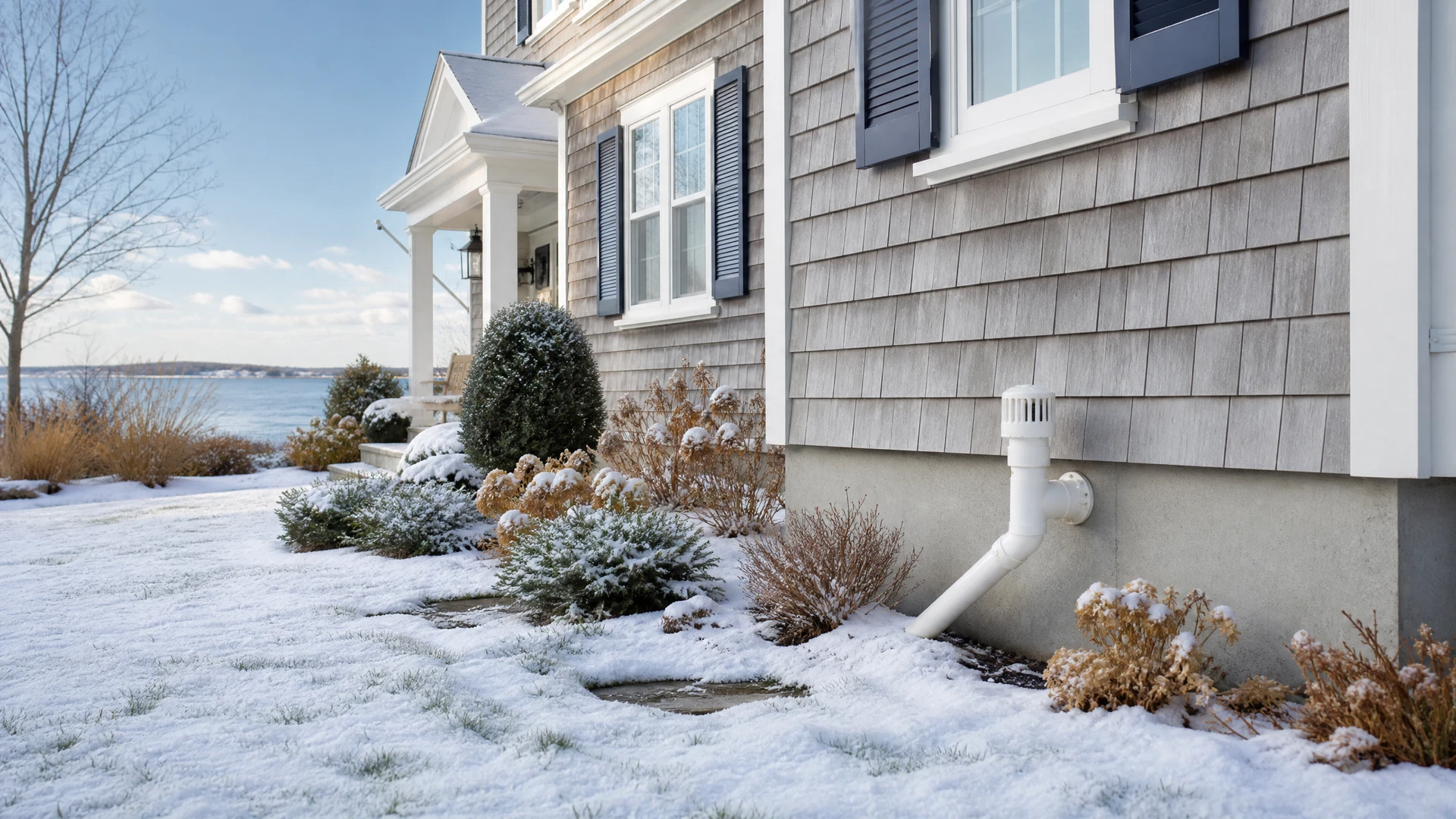
Don't let frozen pipes flood your basement this winter.
A working sump pump cannot protect your home if ice blocks the outside pipe. Learn how to check your system, what to disconnect before freezing weather, and when to call a professional.
Basement Health Diagnostic
Identify Your Basement Risk
in 10 Seconds
High water tables, tidal shifts, and aging equipment put continuous pressure on Cape Cod and South Shore foundations.
Water Pooling Near Pit
Dampness, seepage, or standing water indicates your primary pump is struggling to keep pace with the regional water table.
Dampness, seepage, or standing water indicates your primary pump is struggling to keep pace with the regional water table.
Pump Runs Continuously
A motor that cycles constantly or fails to shut off signals a stuck float switch or an undersized unit nearing total burnout.
A motor that cycles constantly or fails to shut off signals a stuck float switch or an undersized unit nearing total burnout.
Equipment is 7+ Years Old
Submersible pumps have an average mechanical lifespan of 7 to 10 years before sudden internal component failure occurs.
Submersible pumps have an average mechanical lifespan of 7 to 10 years before sudden internal component failure occurs.
Unprotected During Power Outages
Coastal storms frequently sever power; without a high-capacity battery backup, a primary pump offers zero flood protection.
Coastal storms frequently sever power; without a high-capacity battery backup, a primary pump offers zero flood protection.
Seasonal Thaws & Tidal Pressure
Heavy precipitation and rapid thaws elevate groundwater levels quickly, testing your system's peak gallons-per-hour capacity.
Heavy precipitation and rapid thaws elevate groundwater levels quickly, testing your system's peak gallons-per-hour capacity.
System Condition Unknown
If your pump hasn't been inspected or cleared of pit debris in over 12 months, hidden mechanical flaws can lead to sudden overflow.
If your pump hasn't been inspected or cleared of pit debris in over 12 months, hidden mechanical flaws can lead to sudden overflow.
Recognize any of these warning signs? Same-week scheduling available.
What We Do
Our Services
Every service is built around one goal: protecting your basement before a problem becomes a disaster.
Primary Service
Sump Pump Replacement
When a sump pump fails — or shows signs of failure — we replace the entire system, not just the pump. We evaluate the sump basin, float switch, check valve, discharge piping, and electrical supply to ensure the new installation is correctly sized for your home's groundwater conditions. Most replacements are completed in a single visit.
The most common call we receive. And the one we've built our entire company around.
New Installation
If your home doesn't have a sump pump system yet, we handle new installations from start to finish — basin excavation, pump selection, float switch configuration, discharge piping, and battery backup. We assess your home's specific groundwater conditions before recommending a system, so the installation is correctly sized from day one.
Battery Backup Systems
A battery backup system activates automatically when your primary sump pump loses power during a nor'easter, hurricane, or grid outage. It operates independently of the main electrical supply, continuing to remove water from the sump basin until power is restored. For homes with finished basements, a battery backup is one of the most cost-effective forms of flood protection available.
Annual Assessments
During a Basement Protection Assessment, we evaluate every component of your sump pump system — pump operation, float switch function, check valve condition, discharge piping, sump basin integrity, and battery backup status. We test the system under load, identify any issues, and provide a written summary of findings with honest recommendations. No pressure, no upselling.
Preventive Maintenance
Routine maintenance extends the life of your sump pump system and reduces the risk of unexpected failure. We clean the sump basin, test the float switch and check valve, inspect discharge piping for blockages, verify the battery backup charge, and confirm that the high-water alarm is functioning. Preventive maintenance is far less expensive than emergency replacement after a flooded basement.
Emergency Service
A sump pump failure during active groundwater conditions is a time-sensitive emergency. We provide emergency sump pump service for homeowners throughout Cape Cod and the South Shore when a pump stops working unexpectedly. We arrive with replacement equipment and can typically restore basement protection the same day.
Smart Pump Monitoring
Wi-Fi monitoring systems send real-time alerts to your phone if your sump pump activates, runs continuously, or stops responding. This is especially valuable for seasonal properties, vacation homes, and homeowners who travel — allowing you to know the status of your basement protection system from anywhere, and respond before minor issues become water damage.
What a Complete System Includes
A Reliable Basement Protection
System Is More Than
A Pump.
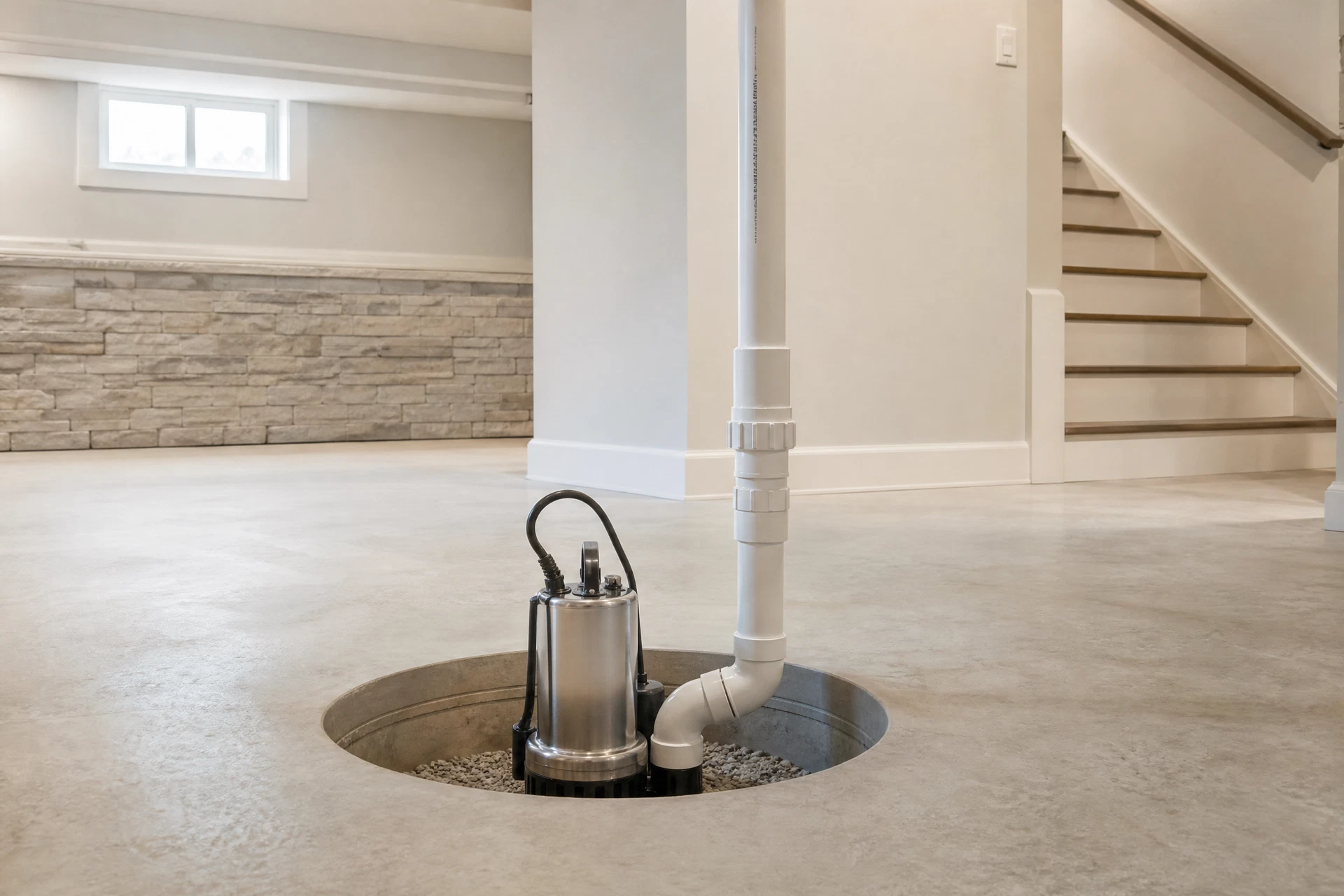
A sump pump system works as a set of interdependent components. The primary pump removes water from the sump basin, but the float switch must trigger it at the right level, the check valve must prevent backflow, and the discharge piping must route water far enough from the foundation to prevent re-infiltration. If any component fails, the entire system can fail — even if the pump itself is new.
During a Basement Protection Assessment, we evaluate every component listed below — not just the pump. We test operation under load, check for installation issues, assess battery backup status, and review whether the system is correctly sized for your home's specific groundwater conditions. At the end, we provide a clear written summary of what we found.
Every assessment covers:
Sized for your home's groundwater volume
Triggers pump activation at the correct water level
Prevents discharged water from flowing back into the basin
Routes water away from the foundation
Collects groundwater from footing drains
Dedicated circuit with GFCI protection
Operates independently during power outages
Alerts you if water rises above normal levels
A new pump installed into a poorly designed system is still a poorly performing system.
That's why we evaluate the entire installation — not just the equipment — and recommend only what your home actually needs.
Understanding Groundwater
Why Basements Flood on
Cape Cod & the South Shore
Groundwater—not just rain—is the biggest threat to basements across Cape Cod and the South Shore.
Groundwater can sit just below your foundation year-round.
Saturated soil increases hydrostatic pressure around your basement.
Melting snow rapidly raises groundwater levels.
Storms combine heavy rainfall with coastal flooding and power outages.
Your sump pump can't protect your home without backup power.
Older systems are more likely to fail when you need them most.
Every Home Is Different
Even homes on the same street can have completely different groundwater conditions based on:
That's why every recommendation starts with a Basement Protection Assessment—not a one-size-fits-all solution.
Understand exactly how groundwater affects your home.
Sump Pump Lifespan
When Should A
Sump Pump Be
Replaced?
Most residential sump pumps last between seven and ten years, although actual lifespan varies significantly based on how often the pump operates, the groundwater conditions in your area, and whether the system has received regular maintenance. Pumps in high-activity areas — homes with shallow water tables or near tidal estuaries — may wear out in five to seven years.
The challenge is that many sump pumps continue to operate normally until the moment they fail. There is often no warning — the pump runs one day and does not run the next. The six warning signals below are the most reliable indicators that a pump should be evaluated before failure occurs.
Replacing an aging sump pump before it fails is almost always less expensive than repairing water damage after a flooded basement.
Water damage restoration for a finished basement typically costs $5,000–$30,000. A proactive replacement costs a fraction of that.
Evaluate your sump pump if it:
More than seven years old
Most residential sump pumps have a service life of seven to ten years. A pump approaching or past that threshold should be evaluated even if it appears to be running normally — motor wear, bearing degradation, and float switch fatigue are often invisible until failure occurs.
Runs continuously or cycles too frequently
A pump that runs without stopping, or activates every few minutes, is either undersized for your home's groundwater volume or has a failed check valve allowing discharged water to flow back into the sump basin. Both conditions accelerate wear and increase the risk of premature failure.
Makes grinding, rattling, or unusual noises
Unusual noises during operation typically indicate worn bearings, a damaged impeller, or debris in the pump housing. These are mechanical warning signs that precede failure and should be evaluated promptly.
Has visible corrosion or rust
Surface corrosion on the pump housing, discharge piping connections, or electrical components indicates moisture exposure and material degradation. Corroded components are more likely to fail under load during high-groundwater events.
Has experienced a previous flooding event
A pump that has been submerged in a flooded basement — or that failed during a flooding event — should be replaced regardless of age. Water intrusion into the motor housing and electrical components causes internal damage that is not always visible externally.
No longer keeps up during heavy groundwater events
If your basement takes on water during nor'easters, heavy rain, or snowmelt despite the pump running, the system is undersized for current groundwater conditions. This is common in older homes where original pump capacity was insufficient for the actual water table depth.
Battery Backup Systems
Why Battery Backup Systems
Matter On Cape Cod & South Shore
A battery backup sump pump system operates independently of your home's electrical supply. When a power outage occurs — during a nor'easter, hurricane, or grid failure — the battery backup activates automatically and continues removing water from the sump basin until the primary pump's power is restored. Most battery backup systems can operate for 8 to 24 hours on a full charge, depending on how frequently the pump cycles.
The timing problem is critical: power outages on Cape Cod and the South Shore most commonly occur during the exact weather events that produce the highest groundwater levels. A nor'easter that knocks out power for 12 hours also saturates the ground and raises the water table. Without a battery backup, groundwater continues rising against your foundation with no pump to relieve the pressure.
Battery backup systems are also valuable as a secondary layer of protection against primary pump failure. If the main pump's float switch malfunctions, the motor burns out, or the check valve fails, the backup system provides a second line of defense before water reaches the basement floor.
For Cape Cod and South Shore homeowners with finished basements, a battery backup system is one of the most cost-effective forms of flood protection available.
It costs a fraction of what a single basement flooding event costs to remediate.
The Problem
Nor'easters, hurricanes, and heavy snowmelt all cause power outages at the same time they create the highest groundwater pressure on your foundation. The primary pump goes offline precisely when it is needed most.
How It Works
A battery backup system includes a separate pump connected to a deep-cycle battery. When the primary pump loses power or fails, the backup activates automatically via its own float switch, continuing to remove water from the sump basin independently.
What It Protects
Finished living space, HVAC systems, water heaters, stored belongings, and structural materials all remain dry during extended outages. The high-water alarm notifies you if the backup is operating so you know conditions require attention.
Why Specialists
Why Choose A Company
That Only Works On
Sump Pumps?
General plumbing companies install many different systems — water heaters, faucets, drain lines, toilets, water filtration. Sump pumps are one service among dozens. When a plumber installs a sump pump, they are applying general mechanical knowledge to a specialized system.
We've chosen a different path. Cape Cod Pump Company was built around one system — residential sump pump replacement, battery backup installation, annual inspections, and preventive maintenance. That focus means we evaluate every installation against a detailed understanding of how groundwater behaves in Southeastern Massachusetts, not just whether the pump turns on.
We identify float switch misconfigurations, undersized pumps, check valve failures, discharge piping problems, and installation issues that are frequently overlooked during general plumbing service calls. Our assessments are thorough because we've seen every failure mode this system produces — and we know which ones lead to flooded basements.
Specialization isn't about doing less.
It's about knowing more.
Local Knowledge
Every Home Has Different
Groundwater Conditions.
Two homes on the same street can have completely different sump pump requirements. A home in Scituate near the North River may experience tidal groundwater fluctuations that a home in Pembroke on higher ground never encounters. A home in Falmouth near a coastal pond faces different conditions than a home in Sandwich on sandy upland soils.
The right sump pump system for your home depends on these specific factors:
How close standing groundwater sits to your foundation year-round
Deeper foundations intercept more groundwater than shallow ones
Sandy glacial soils move water faster than clay-heavy soils
Coastal homes experience tidal groundwater fluctuations beyond rainfall
Surface water management affects how quickly groundwater accumulates
Older perimeter drains may be partially blocked or undersized
That's why every recommendation begins with understanding your home—
not selling equipment.
Common Questions
Questions
Homeowners
Ask.
Straightforward answers about sump pumps, battery backup systems, and basement protection on Cape Cod and the South Shore.
Schedule Your Assessment
Protect Your Basement
Before Groundwater
Becomes A Problem.
Your sump pump isn't designed for ordinary days.
It's designed for the days when everything else goes wrong.
Power outages.
Snowmelt.
Nor'easters.
Hurricanes.
Weeks of saturated ground.
Those are the moments that determine whether your basement stays dry.
774-351-1600
24/7 Emergency Service Available
South Shore & Cape Cod, MA
Serving all towns across the region
Mon – Fri, 9am – 5pm
Office Hours

The Trusted Sump Pump Specialists
— South Shore & Cape Cod —
Serving homeowners throughout the South Shore & Cape Cod.
Services
Quick Contact