Most automatic sump pumps do not have an everyday on switch. The safe way to test one is to confirm it has power, slowly add water to the basin, and watch the float activate the pump and lower the water level. If it does not start, runs without moving water, or trips power, stop testing and call Cape Cod Pump Company at 774-351-1600.
Start With Electrical Safety
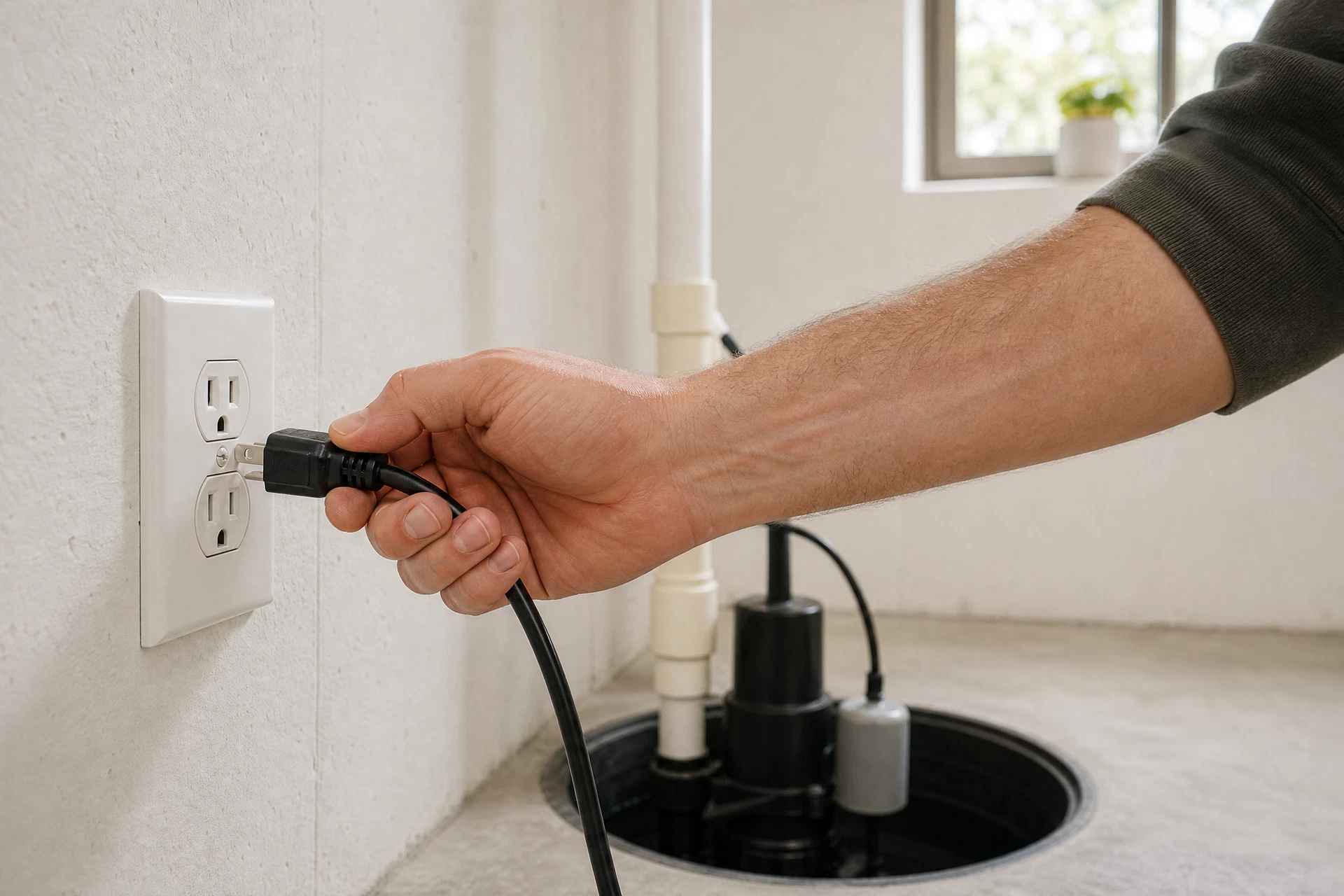
Before testing, make sure the basement floor is dry and the outlet is not wet. Confirm the pump plug is fully seated and check the circuit breaker or GFCI reset if the pump has no power. Never reach into a sump pit or handle wiring while the pump is plugged in. If standing water is near electrical equipment, do not attempt a DIY test.
How to Test the Float Switch
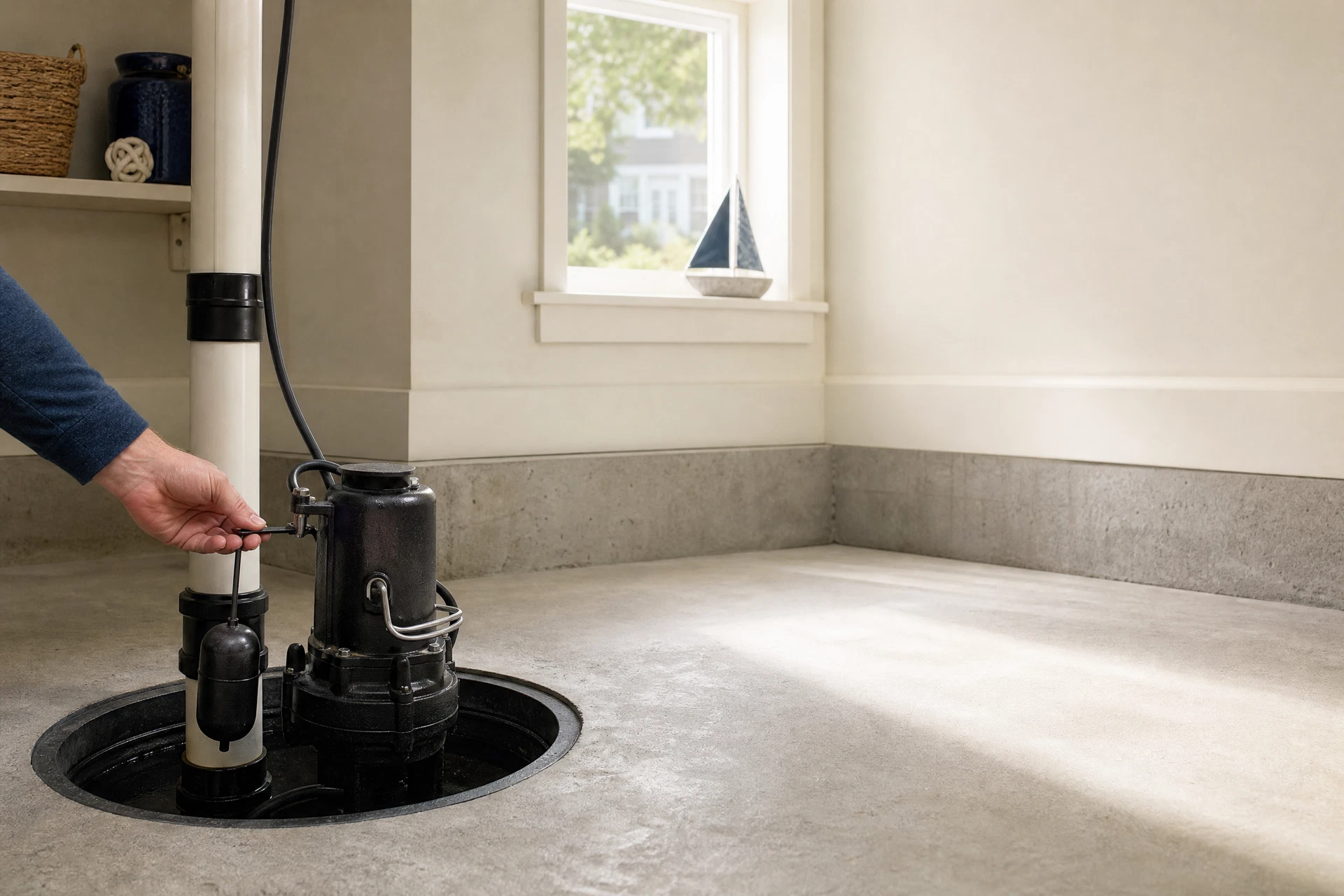
Pour a bucket of water slowly into the sump basin until the float rises. A properly operating pump should start automatically, push water through the discharge line, and shut off after the basin reaches its normal low level. Listen for smooth operation and confirm water is leaving the exterior discharge point. Do not run the pump dry for an extended period.
Can You Turn a Sump Pump On Manually?
Some pumps have a manual or test position on the float assembly, but forcing a pump to run is not a substitute for finding the cause of a failure. If the pump only runs when manually held in position, the float switch may be obstructed or failing. If it hums but does not move water, the intake, impeller, check valve, or discharge line may be blocked.
When a Test Means You Need Repair
Call for service if the pump fails to start, runs continuously, cycles too often, makes grinding noises, or cannot lower the water level. These symptoms can signal a failed float, worn motor, clogged intake, frozen discharge line, or an incorrectly sized system. Early repair is less disruptive than waiting for a storm or power outage.
How Often Should You Test a Sump Pump?
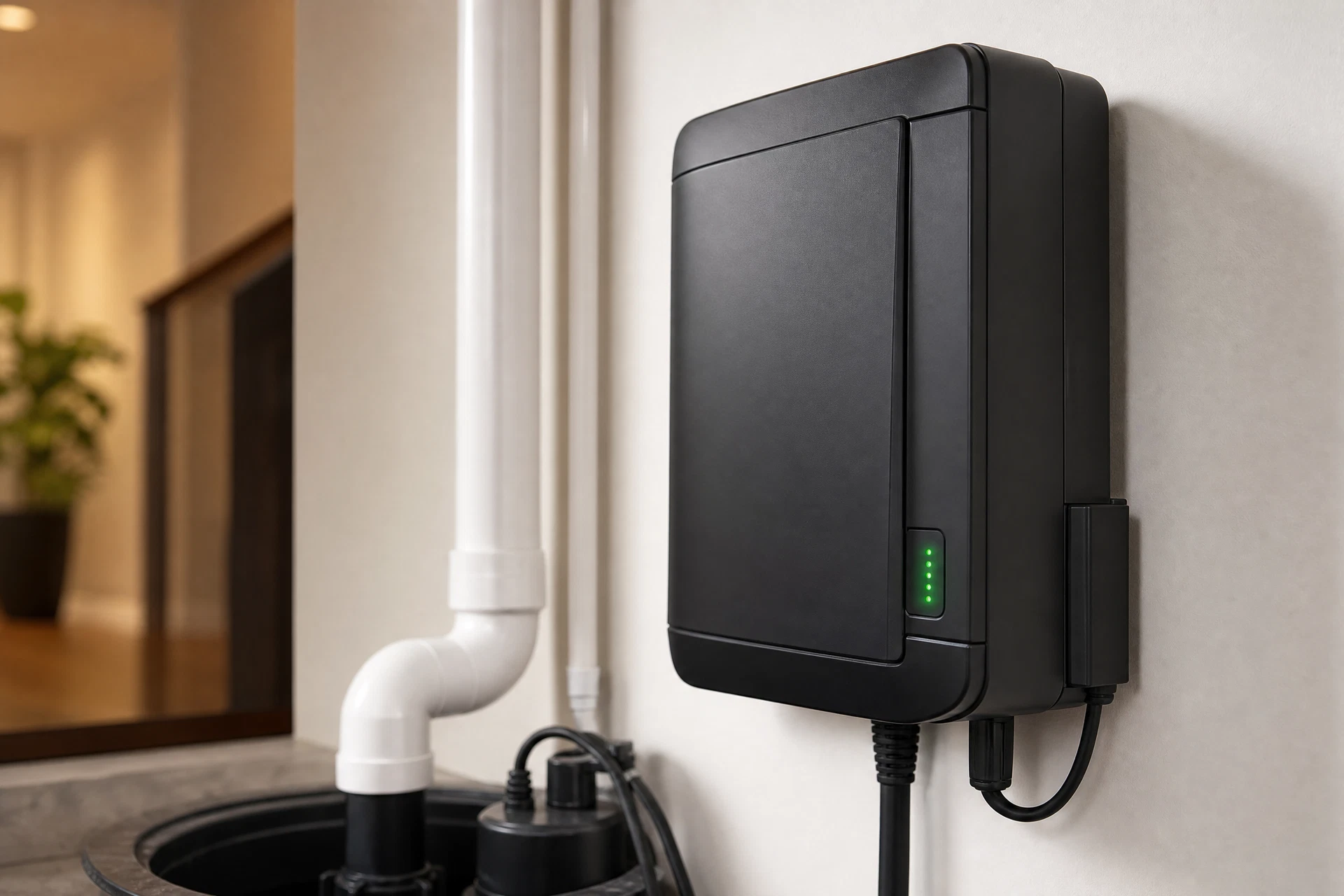
Test your sump pump at least every three months and before major storm seasons. Cape Cod and South Shore homes with active groundwater or finished basements benefit from a professional annual assessment of the primary pump, battery backup, float switch, check valve, and discharge piping.
Frequently Asked Questions
How do I turn a sump pump on?
An automatic sump pump normally turns on when rising water lifts its float switch. To test it safely, add water to the basin until the float rises. Do not force the pump to run dry or reach into the basin while it is plugged in.
How do I test my sump pump switch?
With the pump plugged in and the surrounding floor dry, add water to the basin and watch for the float to rise and start the pump. If the float rises but the pump does not activate, or if the float is tangled, the switch needs inspection.
Why is my sump pump not turning on during a test?
First check the plug, circuit breaker, and GFCI reset. If power is available, the likely causes are a stuck float switch, clogged intake, failed motor, or damaged wiring. Stop testing if you see water near electrical equipment and call for service.
Should I test my battery backup sump pump too?
Yes. Test the backup system according to the manufacturer instructions at least once each season, and have the battery tested annually. A backup that has never been used can still lose capacity over time.
Cape Cod Pump Company — South Shore & Cape Cod, MA
Questions About Your Basement?
We are the dedicated sump pump specialists for Cape Cod and the South Shore. Schedule an assessment and get honest answers about your system — no pressure, no upselling.