If your basement is actively flooding, act in this order: protect yourself from electrical hazards first, then remove water, then address the source. Cape Cod Pump Company provides 24/7 emergency service at 774-351-1600 — call us while you work through these steps.
Step 1: Electrical Safety First
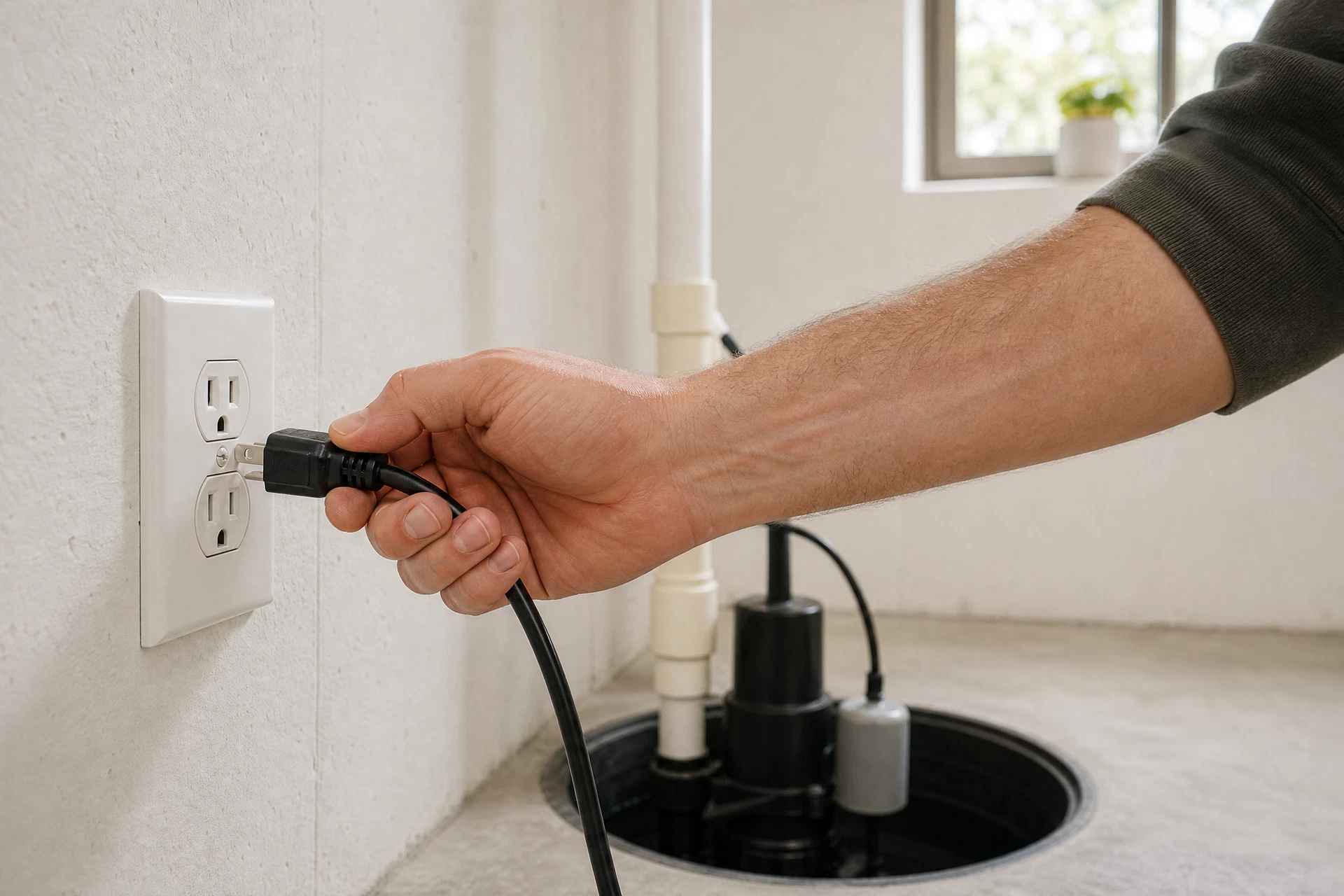
Before entering a flooded basement, go to your electrical panel and turn off the circuit breaker for the basement. Do not step into standing water if any electrical outlets, appliances, or wiring are submerged — water conducts electricity and contact can be fatal. If you cannot safely reach the panel without entering the water, call your utility company's emergency line to cut power to the building before proceeding.
Step 2: Call for Emergency Service
Call Cape Cod Pump Company at 774-351-1600 now for 24/7 emergency response across Cape Cod and the South Shore. Calling early lets you get guidance while you focus on safe water removal.
Step 3: Remove Water with a Wet-Dry Vacuum
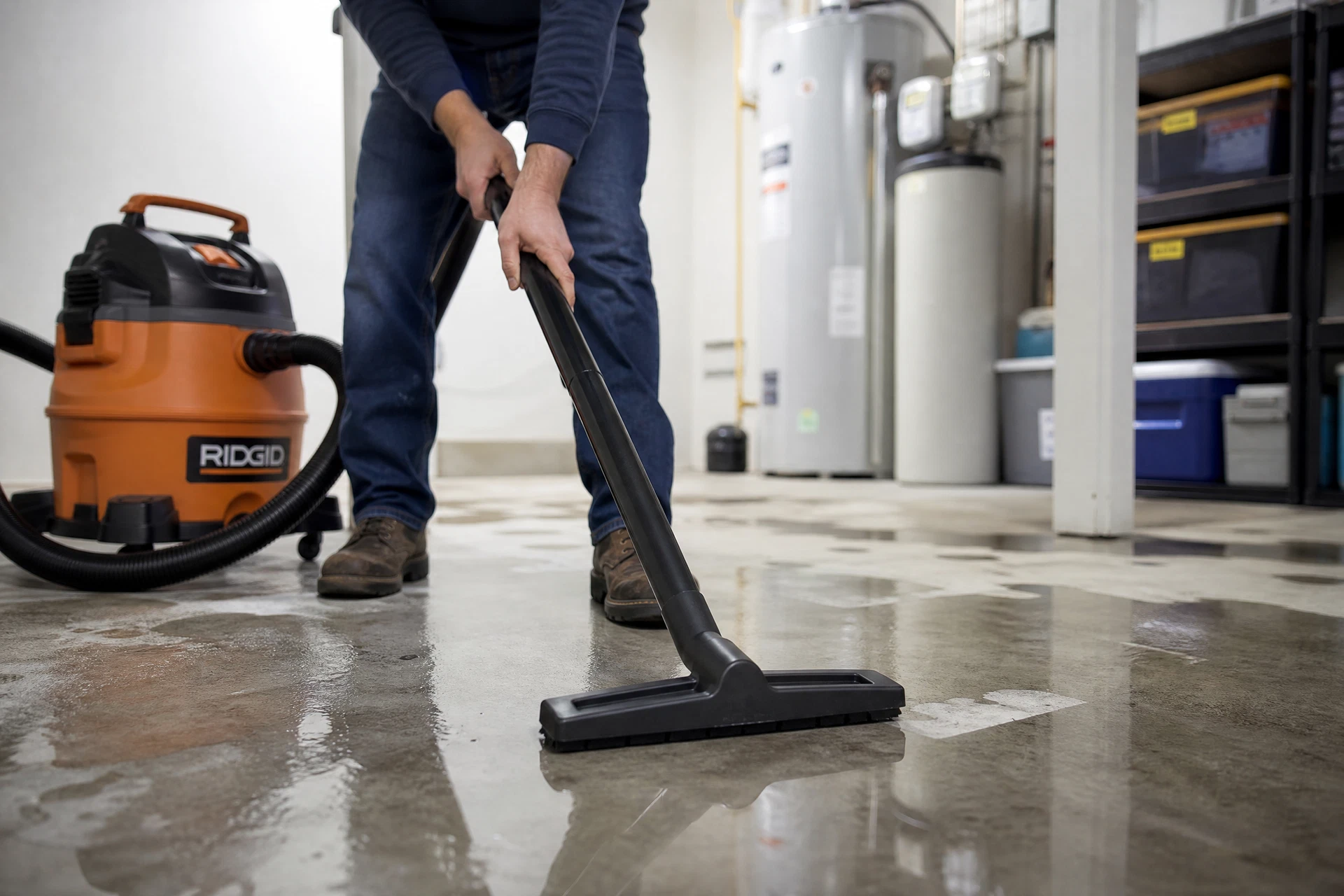
A wet-dry vacuum is the fastest tool for removing water from a basement floor. Set it to liquid mode, remove the filter, and work in sections from the farthest corner toward the drain or sump pit. Empty the tank frequently — a standard 5-gallon wet vac holds approximately 40 pounds of water when full. For water deeper than 2–3 inches, a submersible utility pump (available at most hardware stores for under $50) will move water significantly faster than a wet vac.
Step 4: Manually Trigger or Bail the Sump Pit
Most sump pumps do not have a manual override button — they are activated by the float switch. To manually trigger the pump, locate the float and lift it upward. Hold it up and the pump should run. If the pump is completely non-functional, bail the pit manually using a bucket. A standard sump pit holds 15–25 gallons — bailing it every few minutes will prevent overflow while you wait for emergency service.
Step 5: Document the Damage
Once the immediate flooding is under control, photograph everything before cleanup begins. Document water lines on walls, damaged items, and the condition of the sump pit and pump. This documentation is essential for homeowner's insurance claims. Contact your insurance agent as soon as possible to understand your coverage.
Frequently Asked Questions
How do I stop my basement from flooding right now?
Cut power to the basement at the circuit breaker first. Then call Cape Cod Pump Company at 774-351-1600 for emergency service. While waiting, use a wet-dry vacuum or submersible utility pump to remove water. Manually trigger the sump pump by lifting the float switch upward. If the pump is non-functional, bail the pit with a bucket to prevent overflow.
How do I use a wet vac to clear water?
Set the wet-dry vacuum to liquid mode and remove the filter before use. Work in sections from the farthest corner toward the sump pit, emptying the tank frequently. For water deeper than 2–3 inches, a submersible utility pump will move water much faster than a wet vac.
Where is the manual override for a sump pump?
Most residential sump pumps do not have a dedicated manual override button. To manually activate the pump, lift the float switch — the ball or cylinder attached to the pump by a short arm or cord. Lifting it upward triggers the pump motor to run.
How do I bail water out of a sump pit manually?
Use a bucket to scoop water from the pit and carry it to a floor drain, utility sink, or outside. A standard sump pit holds 15–25 gallons. Bailing every few minutes will prevent the pit from overflowing into the basement while you wait for emergency service or a replacement pump.
Cape Cod Pump Company — South Shore & Cape Cod, MA
Questions About Your Basement?
We are the dedicated sump pump specialists for Cape Cod and the South Shore. Schedule an assessment and get honest answers about your system — no pressure, no upselling.