Before a fall nor’easter, homeowners should clear gutters, move water away from the foundation, check the outside sump pump outlet, and test the pump before the rain starts. A sump pump can manage groundwater in the pit, but it cannot make up for roof runoff, clogged drains, or water that is being directed back toward the house. For Cape Cod and South Shore homes, these outside checks can reduce the pressure on the basement system when autumn rain arrives.
Why Fall Rain Can Put a Basement at Risk
Fall storms arrive when leaves, pine needles, and summer debris can block the paths water needs to follow. A clogged gutter can overflow beside the foundation. A downspout that ends too close to the house can send roof runoff directly into the soil around the basement. On Cape Cod and the South Shore, sandy soil moves water quickly, so a long rain can increase the work your sump pump has to do even when the basement has stayed dry in the past.
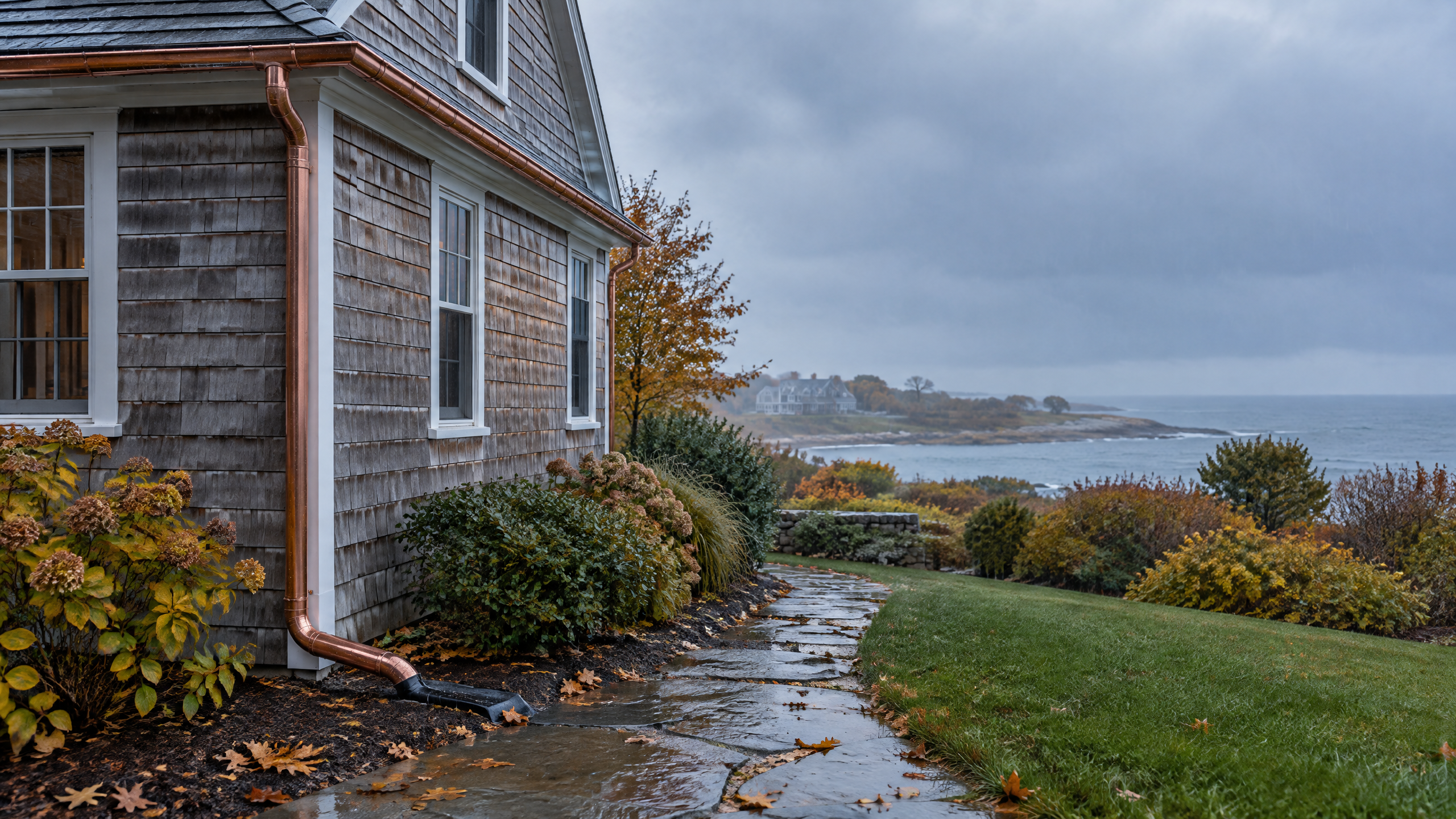
1. Clear Gutters and Downspouts
Remove leaves and debris from gutters, then confirm each downspout is open and sending water away from the home. During the next rain, take a quick look outside to see whether water is spilling over an edge or pooling beside the foundation. If a downspout extension is used, keep it sloped so water does not collect and create a new problem closer to winter.
2. Look for Water That Flows Back Toward the House
Walk the perimeter after a normal rain. Pay attention to puddles near basement windows, bulkhead doors, steps, and low spots along the foundation. Soil, mulch, decorative edging, and settled walkways can all create a path back toward the home. Correcting small drainage issues before a storm is easier than discovering them while the sump pump is already running hard.
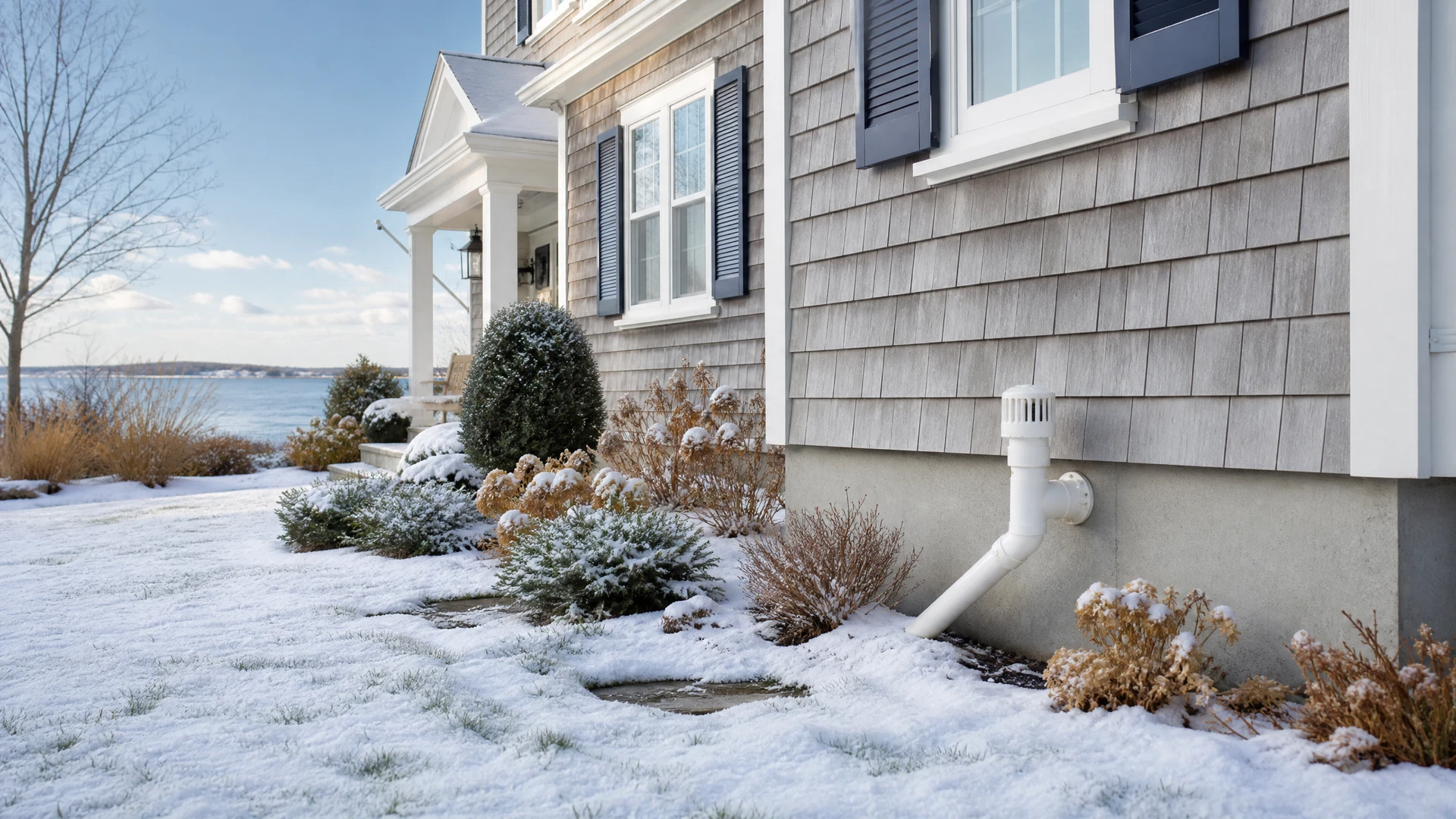
3. Keep the Outside Sump Pump Outlet Open
Find the point where your sump pump sends water outside and make sure it is visible and clear. Remove leaves, mulch, stored items, and anything else that could block the outlet. The area should drain away from the foundation. If you cannot locate the outlet or the route is hidden under landscaping or a deck, arrange an assessment before winter weather makes a blockage harder to identify.
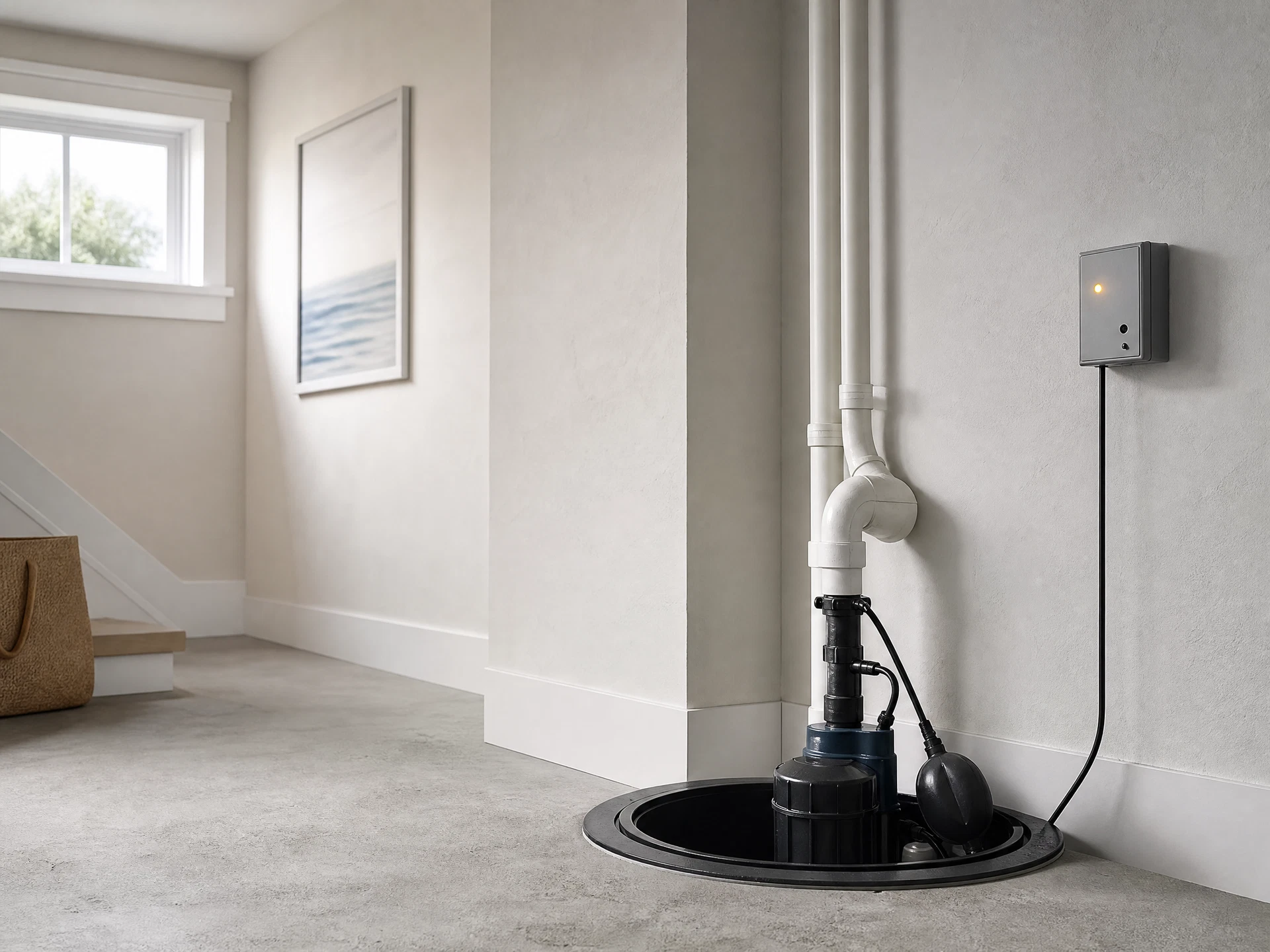
4. Test the Sump Pump Before the Forecast Changes
With the electrical area dry, slowly add water to the sump pit and confirm the float starts the pump, the water level drops, and water reaches the outside outlet. Stop if the pump hums, runs without lowering the water, trips power, or makes a new grinding sound. A test before the storm gives you time to repair or replace a weak component on your schedule.
5. Check the Battery Backup and Alarm
A fall nor’easter can bring heavy rain and a power interruption at the same time. Confirm the battery backup shows a healthy charge, the alarm is working, and the battery is within its recommended service life. A Wi-Fi or high-water alarm can be especially helpful for a second home or a basement that is not checked every day.
When to Schedule an Assessment
Schedule an assessment if water gathers near the foundation, the sump pump has not been tested recently, the pump is approaching the end of its working life, or the outside outlet is hard to inspect. Cape Cod Pump Company checks the pump, pit, float switch, check valve, battery backup, and outside route as one system across Cape Cod and the South Shore.
Frequently Asked Questions
Can clogged gutters cause basement flooding?
Yes. When gutters overflow, roof runoff can soak the soil beside the foundation and add pressure around basement walls and the sump pit. Keeping gutters and downspouts clear is a simple way to reduce the amount of water your basement system needs to manage.
What should I check outside before a nor’easter?
Clear gutters and downspouts, look for low spots that send water toward the house, remove debris from the outside sump pump outlet, and confirm exterior drains are not covered by leaves or mulch. Then test the sump pump and battery backup before heavy rain begins.
Is a sump pump enough to protect my basement from heavy rain?
A sump pump is an important part of basement protection, but it does not replace good surface drainage. Gutters, downspouts, grading, and a clear outside outlet keep excess water from being directed toward the foundation in the first place.
When should I clean my gutters in Massachusetts?
Check gutters in early fall and again after most leaves have dropped. If your property has many pine trees, inspect them more often because needles can collect in gutters and outside drains throughout the season.
Why does my sump pump run more during fall rain?
Long rain can raise groundwater around the home, especially in Cape Cod and South Shore sandy soils. A working pump may run more often as it manages that water. If it runs continuously, makes new noises, or does not lower the pit, arrange service promptly.
Cape Cod Pump Company — South Shore & Cape Cod, MA
Questions About Your Basement?
We are the dedicated sump pump specialists for Cape Cod and the South Shore. Schedule an assessment and get honest answers about your system — no pressure, no upselling.