
When closing a Cape Cod seasonal home for winter, do not unplug a working sump pump. Instead, test the system, confirm it has backup power, make the outside outlet safe for freezing weather, and arrange a way to learn about a problem while the home is empty. A vacant home can still face groundwater, rain, snowmelt, and power outages, so the basement protection plan should stay active after you leave.
Why a Vacant Home Needs a Different Winter Plan
An occupied home gives you early warning: you hear an alarm, notice a wet floor, or see that the pump is running more often than usual. A seasonal home may sit empty through a coastal storm or a winter power outage. That makes prevention and notification more important. The goal is not simply to have a sump pump in place, but to know it can operate and that someone will be alerted if it cannot.
1. Keep the Primary Sump Pump Powered
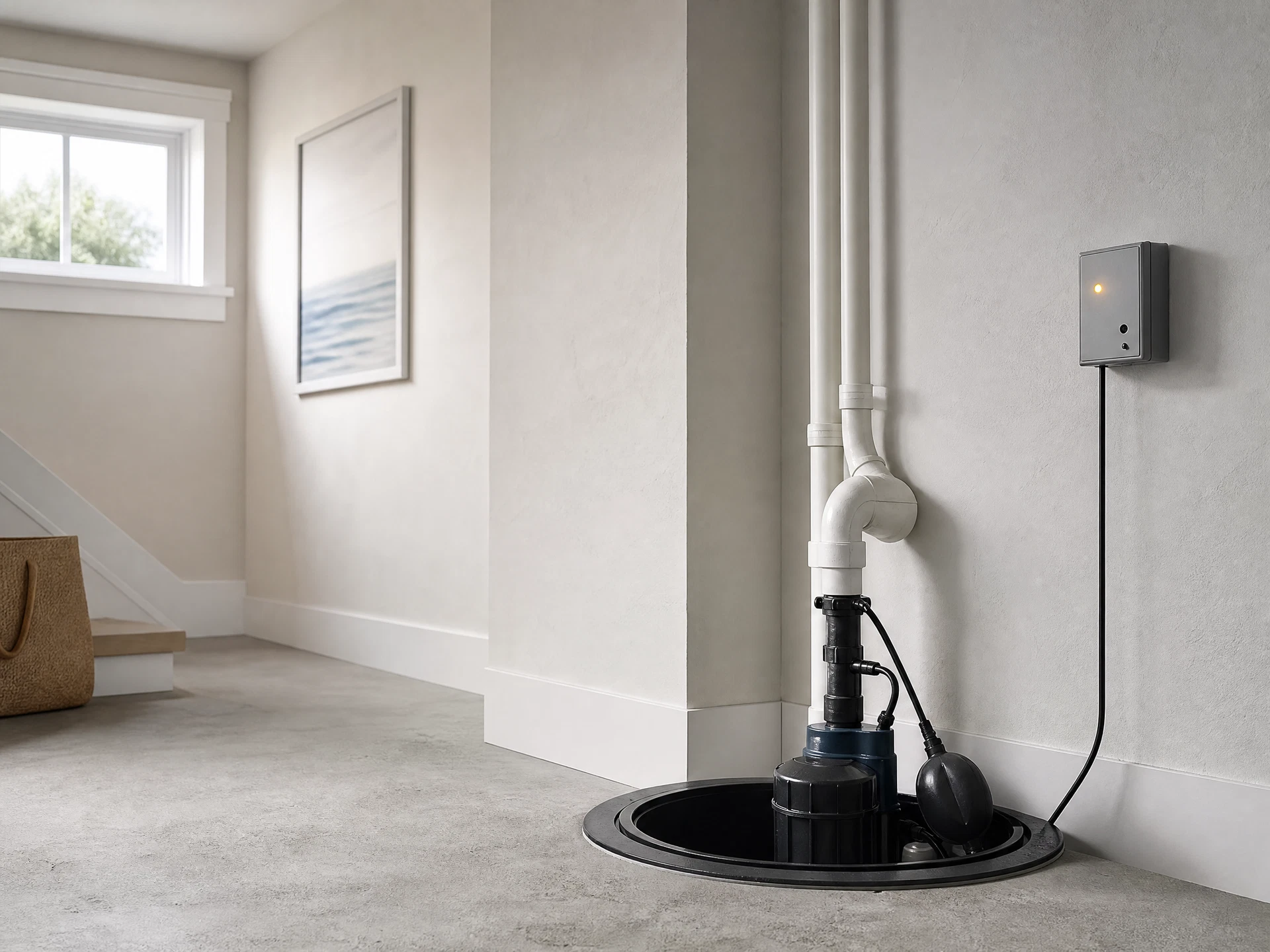
Do not switch off or unplug an automatic sump pump just because the property is empty. Groundwater can enter the pit during winter rain, a thaw, or a storm. Confirm the pump is connected to a working outlet and that the breaker is clearly labeled. If the pump is on a shared circuit that is being shut down during closing, have the electrical plan reviewed before you leave.
2. Test the Pump and Float With Water
On a dry basement floor, add water to the pit slowly and watch for the float to start the pump. The pump should lower the water and then stop normally. Listen for rattling, grinding, or an unusually loud hum. If the system does not pass this simple test, repair it before the home is vacant rather than assuming it will be fine until spring.
3. Verify the Battery Backup Is Ready
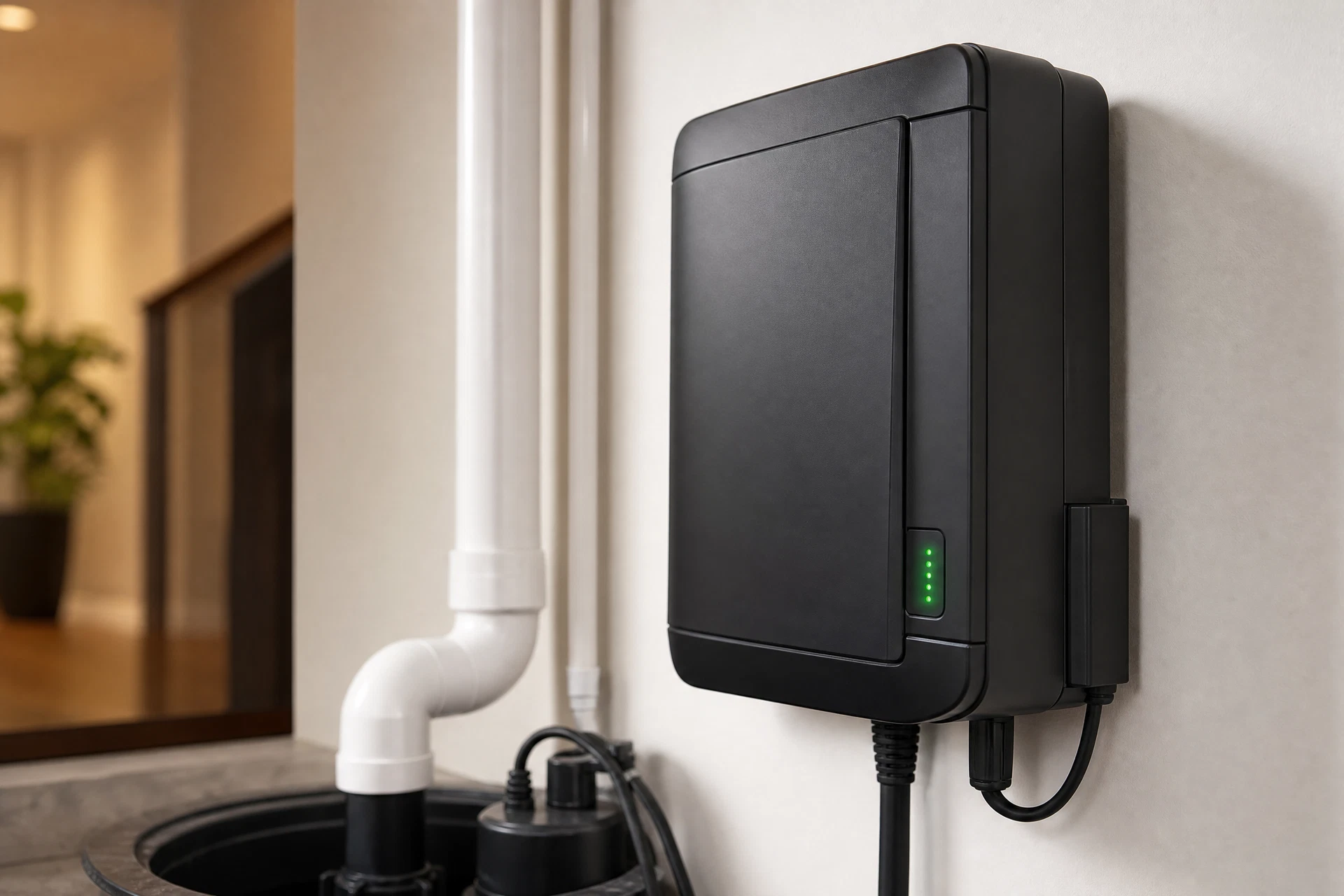
A battery backup is designed to take over when the primary pump loses power or cannot keep up. Check the status light, battery age, connections, and alarm according to the manufacturer instructions. If the battery is near the end of its recommended service life or the backup has not been tested recently, address it before closing the home.
4. Set Up a High-Water or Remote Alert
A high-water alarm warns that the pit is filling higher than it should. A Wi-Fi-connected monitor can also send a notice to your phone when the home has internet service. For a property that will be unoccupied, an alert does not replace regular check-ins, but it gives you a chance to contact a neighbor, property manager, or service professional before water reaches the basement floor.
5. Prepare the Outside Route for Winter
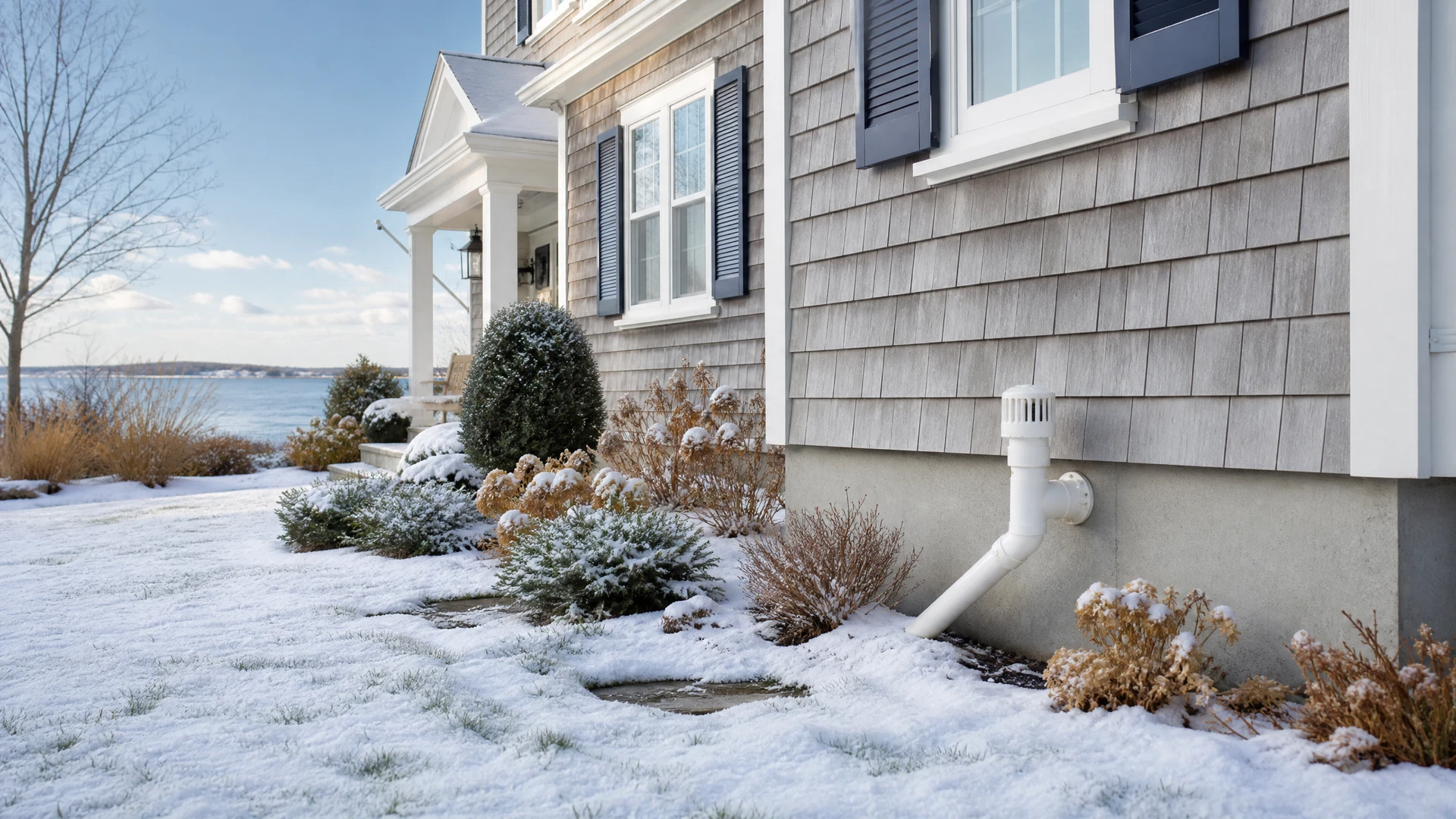
Inspect where water leaves the home. Clear debris, remove seasonal hoses or extensions that hold water, and make sure the outlet will remain accessible as snow builds up. This is separate from turning the system off: the pump should remain ready to move water, while the exterior route needs to be prepared so it does not trap water and freeze.
6. Create a Simple Check-In Plan
Decide who can check the property after a major storm, an extended outage, or an alert. Leave clear information about the location of the electrical panel, sump pit, water shutoff, and service contacts. A short written plan makes it easier for a trusted neighbor or caretaker to recognize when a situation is urgent.
Before You Leave for the Season
The best time to identify an old pump, weak battery, blocked outlet, or missing alarm is before the last trip home. Cape Cod Pump Company can assess the full sump pump system for seasonal homeowners across Cape Cod and the South Shore, including pump condition, backup readiness, outside piping, and practical next steps for winter.
Frequently Asked Questions
Should I unplug my sump pump when closing a seasonal home?
No. Leave a working automatic sump pump powered so it can respond to groundwater, rain, and snowmelt while the home is empty. If shutting down part of the electrical system affects the sump pump circuit, have that plan reviewed before leaving.
Do I need a battery backup at a vacant Cape Cod home?
A battery backup is strongly recommended for any vacant home that relies on a sump pump. It can keep water moving during a power outage or when the primary pump fails, giving you another layer of protection when no one is there to respond immediately.
How do I monitor a sump pump remotely?
Use a high-water alarm or a Wi-Fi-connected monitor that can send an alert to your phone. Make sure the device is tested, the home internet is reliable, and a trusted person can access the property if an alert occurs.
What should I do with the outside sump pump hose before winter?
Remove or reconfigure any seasonal hose or extension that sags and holds water. Clear the outlet and make sure the permanent outside route drains away from the foundation. Water trapped in an exterior hose can freeze and block the system.
How often should someone check a winterized seasonal home?
The right schedule depends on the home and local conditions, but a check after major storms, extended outages, or an alarm notification is wise. A caretaker should know how to recognize a rising-water or power-related issue and who to call.
Cape Cod Pump Company — South Shore & Cape Cod, MA
Questions About Your Basement?
We are the dedicated sump pump specialists for Cape Cod and the South Shore. Schedule an assessment and get honest answers about your system — no pressure, no upselling.